Different liquid systems lead to different behavior
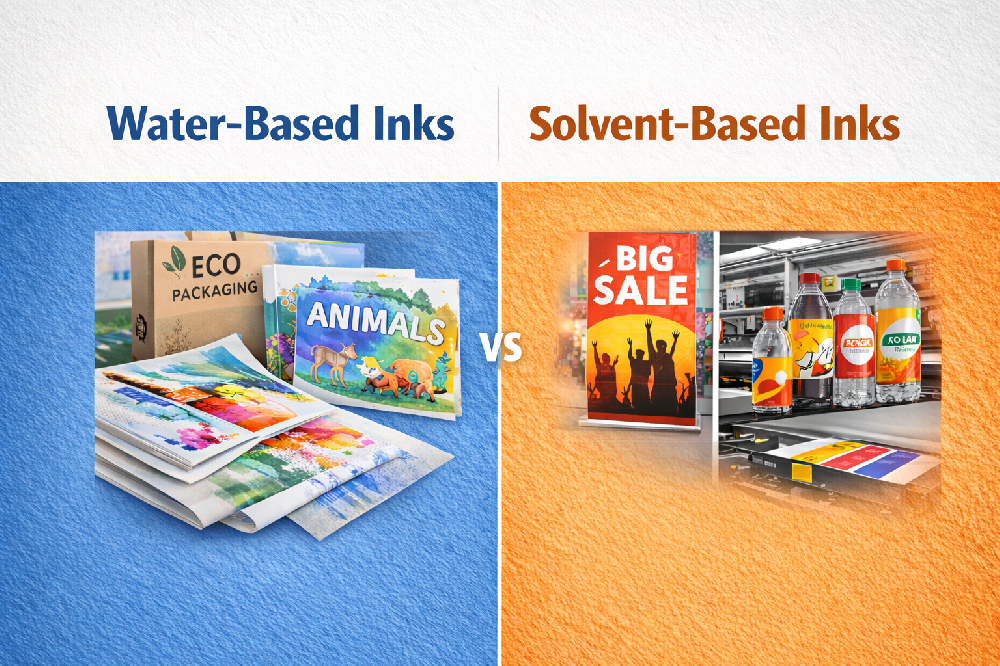
Water-based inks use water as an important part of the liquid system, while solvent-based inks rely on organic solvent systems suited to the printing process and substrate. The complete formulation also includes the binder, pigment and other functional components needed for that application.
These differences influence wetting, evaporation, adhesion, press handling and the practical conditions required for drying.
Choose according to substrate and printing process
Paper, corrugated packaging, films and flexible packaging can place very different demands on the ink system. Absorbency, surface treatment, line speed and curing or drying equipment all need to be considered.
The appropriate pigment grade should be evaluated for shade, dispersion, bleed resistance and compatibility with the specific binder and liquid system.
Measure the formulation under production conditions
Grinding and dispersion quality affect print appearance and color development. Viscosity should be checked using an identified method and test temperature, while a fineness-of-grind gauge helps detect coarse particles remaining in the ink.
Environmental and market-specific requirements should be reviewed for the finished formulation and the destination market rather than inferred from a general product description.