Start with the carrier resin
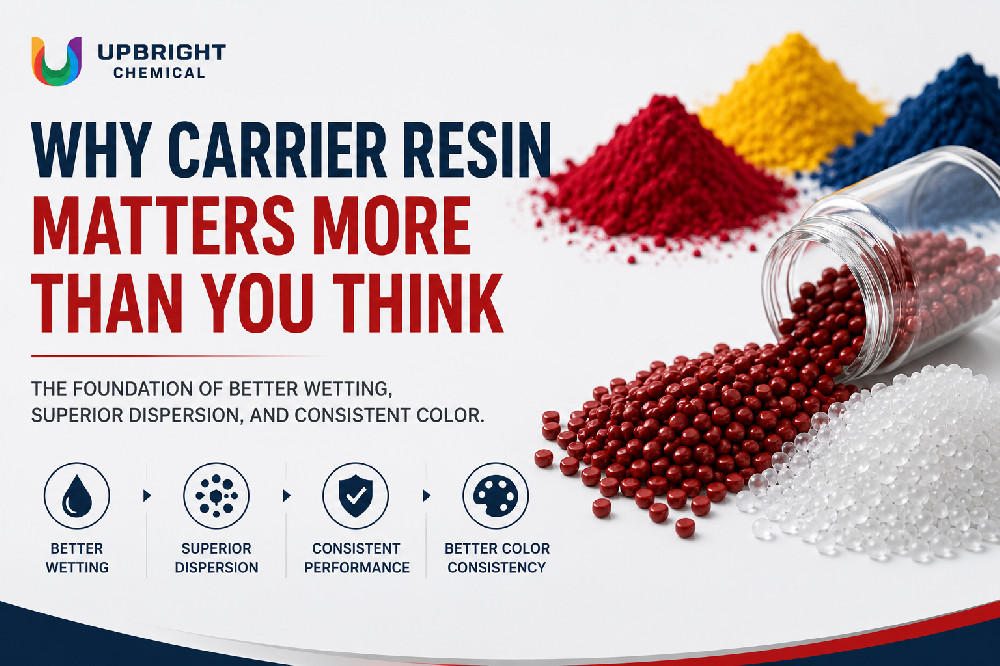
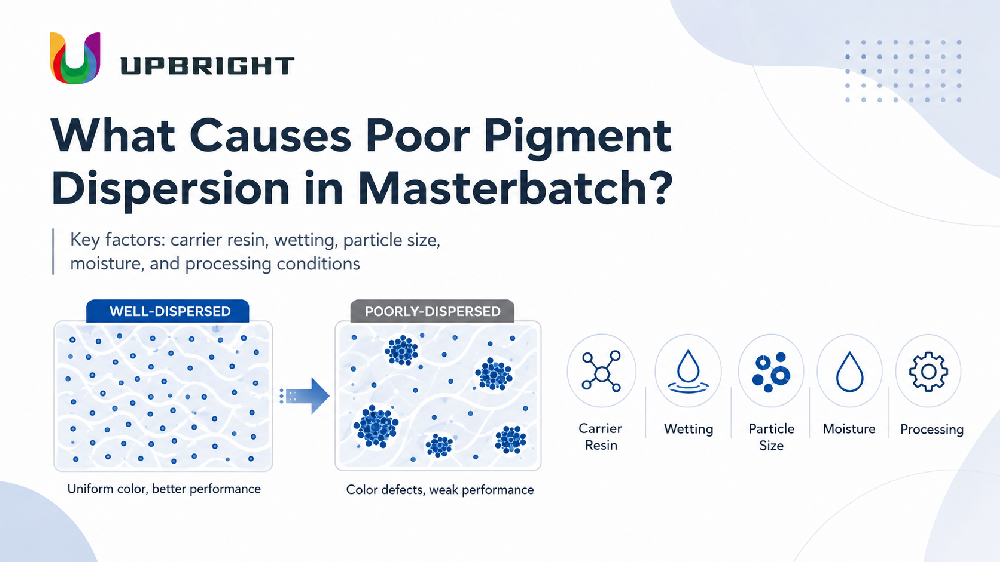
Poor dispersion often begins before the compound reaches the high-shear zone. When the carrier resin does not adequately wet the pigment surface, agglomerates remain intact and later appear as specks, streaks or unstable color strength.
The carrier must be compatible with both the pigment and the final polymer. Melt-flow behavior, softening range and the physical form of the resin all affect how effectively the pigment is incorporated.
Check pigment condition and extrusion settings
Coarse particles, residual moisture and hardened pigment agglomerates increase the load on the compounding stage. Incoming material should be assessed for appearance, handling behavior and the relevant quality-control results before production.
Screw configuration, residence time, temperature profile and throughput need to be considered together. Raising screw speed without improving wetting or adjusting the feeding sequence does not necessarily improve dispersion.
Verify the result in the intended application
A filter pressure value test can reveal the presence of poorly dispersed particles, but its result only has meaning when screen specification, pigment concentration, polymer, throughput and the test method are identified.
Injection-molded color plaques, film trials or fiber-spinning trials are useful final checks. The appropriate acceptance criteria depend on the customer's actual process and product requirements.