Understand what the test is actually measuring
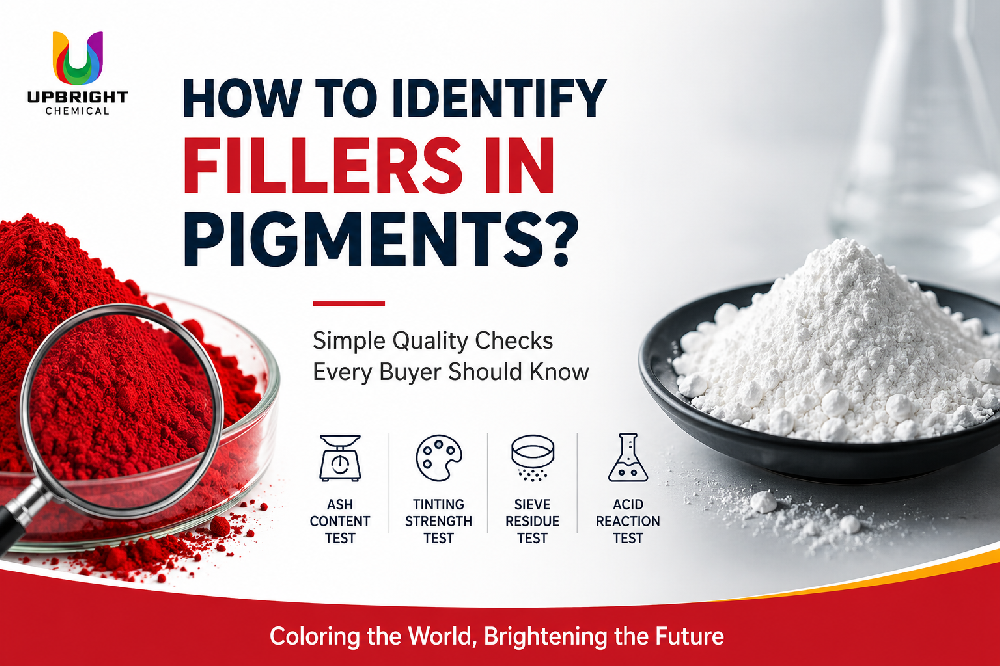
Ash content can help indicate the presence of inorganic residue in an organic pigment, but it should not be treated as a universal pass-or-fail rule. The interpretation depends on the pigment chemistry, manufacturing process and any openly declared formulation.
A standardized pigment preparation and an undeclared dilution are not the same thing. Commercial comparison requires the supplier to identify the actual grade and disclose its relevant specification.
Compare color strength and physical behavior
A controlled drawdown, molded plaque or print trial can reveal differences in tinting strength and shade at the same loading. Unexpectedly low strength may justify further investigation, although dispersion quality must also be considered.
Particle inspection, bulk behavior and density-related observations provide additional context. None of these checks should be interpreted in isolation.
Request traceable supplier documentation
Ask for the current technical data sheet, a representative batch certificate and clarification of the relevant testing method. Where a customer has defined acceptance criteria, test both the reference material and the proposed supply under the same procedure.
An unusually low offer is a reason to verify performance and documentation carefully, not proof of any particular formulation by itself.